


Are you a Pilot or a Passenger
In your business?
You wouldn’t get on a plane without knowing where it was going! So why do so many business owners find themselves stuck operating their business with no idea where it is taking them?
The statistics are sobering! Of those businesses put on the open market, 8 of 10 will not sell. Of those that do sell, many will recognize lower valuations because the owners did not understand what drives business value or appropriately plan for their exit. And 75% of business owners who do successfully sell their business report experiencing “profound regret” one year after selling—again, usually due to poor personal planning.
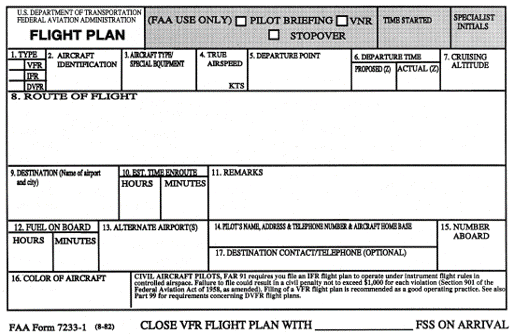
How do owners deal with these realities, and ensure successful outcomes? It all starts with teaching owners how to fly their business. Flight Plan Strategies helps owners with Destination Planning by developing business Flight Plans that reframe Seven key questions that every pilot addresses before each, and every, takeoff flight:
Where is your business taking you?
Who’s coming with you on the journey?
When do you want to depart?
How long will your journey take you?
What route will you take to get to your destination?
What knowledge and resources are required to reach your destination?
What are the threats that will prevent your successful arrival?
The process starts with a Pre-Flight Assessment, which we call an ExitMap, a short, free questionnaire that scores how ready a business owner is for an eventual exit or transition and delivers a structured report highlighting strengths and gaps. Results are broken into four
main categories: Finance, Planning, Profit/Revenue, and Operations, each with its own readiness score.
Whether you are just starting your business ownership journey or preparing for a safe landing in the future, it is never too early or too late to start planning. So, start treating your planning like a pilot today, and Fly Your Business!

Sooner or later, every owner will leave their business. Sometimes this is by choice, and sometimes by necessity.
An Exit Plan is simply a strategic business plan with a defined time frame. It is the identification of your priorities and the preparation for a transfer of your responsibilities.
You may wish to step back from day-to-day operations, start a succession path for employees or family members, or perhaps divest the business from your asset base entirely. Regardless of your motivation, to facilitate a successful transition and control the process, you’re going to need to do some planning.
Even if you are not ready to exit today, establishing a plan will change the way you run your business and help you adjust to changing circumstances in the future. And just because you have a plan doesn’t mean you need to implement it immediately. It simply means that you will be ready when the time comes.
So, create your Personal Exit Map and establish a baseline for your Overall Exit Preparedness. 15 minutes to answer 22 questions is all it takes!
Fly Your Business: A Clear Flight Plan for Owners Preparing to Step Out of the Cockpit
Whether you’re thinking about selling, shifting ownership to the next generation, or stepping back from day-to-day control, your exit will be one of the most consequential “flights” your business ever takes.
Most owners are experts at running the business, but not at exiting it. As you think about your next chapter, tough questions start to surface:
How will buyers, family, or key employees really judge the strength and value of this business?
What risks in your financials, customer mix, or leadership bench could quietly weaken offers or stall negotiations?
How might taxes, legal details, and deal terms change what you actually walk away with?
What will your life look like once you’re no longer at the center of every decision and every crisis?
Fly Your Business uses a pilot’s mindset to bring order to these questions, turning a complex transition into a structured “mission profile” you can work with.
With the guide, you’ll be able to:
Inventory your business from a buyer’s or successor’s perspective and see where you’re strong and where you’re exposed.
Understand how different exit paths and deal structures change your risk, control, and long-term financial security.
Frame your transition as a conversion of business value into personal freedom; one that protects employees, customers, and the legacy you care about.
The result is less guessing, less anxiety, and more confidence in how and when you eventually step out of the cockpit.
If you can imagine a future where you’re no longer at the center of your business, now is the time to start planning how you’ll get there.

CERTIFICATIONS


SUBSCRIBE TO OUR NEWSLETTER
